Late March 2022

31st March. Bracing northerly with occasional hail, sleet and snow. The highlight of the day was the evenings high tide, which was much higher than predicted (full counts to follow), pushing up masses of waders and Larid from the Wash. Around were 130 Dark-bellied Brent Goose, 4 Pink-footed Goose, 3 Pintail, 56 Eider, 22 Turnstone, a Little Gull, a Mediterranean Gull, 550 Common Gull, 55 Great Black-backed Gull, 850 Herring Gull, a Yellow-legged Gull, 19 Lesser Black-backed Gull, a Marsh Harrier, 2 Blackcap, 2 Goldcrest, 65 Redwing and a Corn Bunting.

The new saltmarsh at the peak of the evening tide, 31st March 2022. 
Photos - Ben Ward

Avocets 31st March 2022. Photo: Tom Baker

30th March. Cool northerly with rain from mid morning. Around were a Light-bellied Brent Goose, 166 Dark-bellied Brent Goose, 7 Pintail, 62 Eider, 22 Turnstone, 212 Redshank, a Spotted Redshank (Old Saltmarsh), 2 Mediterranean Gull, a presumed Viking Gull, a Marsh Harrier, a Short-eared Owl, 3 Merlin, a Peregrine, 3 Blackcap, 2 Fieldfare, 62 Redwing, a Stonechat, a Water Pipit, a Brambling, a Bullfinch and 2 Corn Bunting.

Spotted Redshank, 30th March 2022. Photo - Ben Ward 
 A Light-bellied Brent amongst Dark-bellied Brent Geese, 30th March 2022. Photo - Ben Ward 

2cy Viking Gull, presumed, or pale end argentatus, 30th March 2022.
Photo - Ben Ward 

29th March. Around were a Light-bellied Brent Goose, 166 Bark-bellied 3Brent Goose, 28 Eider, a Whimbrel, 320 Sanderling, 3 Woodcock, 2 Marsh Harrier, a Barn Owl, a Short-eared Owl, the first Willow Warbler of the year, 3 Blackcap, 16 Fieldfare, 78 Redwing, 27 Song Thrush, a Black Redstart, a Stonechat, a Yellow Wagtail, a Brambling, a Bullfinch and 4 Corn Bunting.

                                            Barn Owl, 29th March 2022. Video: Ben Ward

Stonechat, 29th March 2022. Photo: Ben Ward


Light-bellied Brent 29th March 2022. Photo: Ben Ward

28th March. Bright but chilly day, decreasing visibility in the evening. Another good day for raptor passage which included south; 6 Sparrowhawk, 2 Marsh Harrier, 4 Red Kite, 43 Buzzard, and 6 Kestrel. Around were a Grey Partridge, 4 Pink-footed Goose, 7 Pintail, 3 Ruff, 14 Snipe, a Great Egret, 2 Marsh Harrier, a Short-eared Owl, a Barn Owl, a male Merlin, the first Yellow Wagtail of the year, a Water Pipit and a Corn Bunting. 2 Goosander flew south over the shore.

Short-eared Owl, 28th March 2022. Photo: Matt Laing

Ringed Plover, 28th March 2022. Photo: Ben Ward

27th March. Long-eared Owl was the day's highlight.

26th March. 2 Black Redstart remained and another Red Kite flew south. Starlings were reduced to 10,000 at roost.

25th March. 2 Black Redstart were around the Visitor Centre this morning and some 40 Redwing were around. Vis mig highlights were 8 Crossbill and a Red Kite south and an early Whimbrel north. Starling numbers had dropped right down to 30,000 at roost. Other highlights were single Jack Snipe and a Pale-bellied Brent Goose still with the Brent flock.

24th March. Black Redstart was at the Visitor Centre early morning and there was further Thrush and Finch movement early morning, including 44 Fieldfare, 18 Redwing, 2 Tree Sparrow, 12 Brambling, 5 Crossbill and 203 Siskin as well as another arrival of Woodcock (11), a single Jack Snipe and the first Ring Ouzel of the spring. Around were 140 Dark-bellied Brent Goose, 3 Mediterranean Gull, a Great Egret, 2 Blackcap, 200,000 Starling, 25 Fieldfare,18 Redwing, a White Wagtail, a Water Pipit and a Corn Bunting.  

Black Redstart 24th March. Photo: Ben Ward


Meadow Pipit and Chiffchaff 24th March. Photos: Tom Baker


Dotted Border 24th March. Photo Nige Lound

23rd March. Hawfinch was again elusive around the Plantation. Black Redstart and Lapland Bunting were new arrivals with a notable increase in thrushes with 62 Blackbird, 2 Redwing and 21 Song Thrush. There were 7 Egyptian Geese and a Marsh Harrier over Croftmarsh. Around were a Little Gull, 5 Sparrowhawk, 2 mobile Bearded Tit, a singing Blackcap, 190000 Starling, 2 Water Pipit and 11 Corn Bunting. 104 Siskin flew south.

The highlights of overnight moth-trapping were Oak Beauty and Yellow-horned (new for the Reserve list).


Great Crested Grebe and Egyptian Geese 23rd March. Photos: Tom Baker


Black Redstart, Yellow-horned Moth and Oak Beauty 23rd March. 

Photos: Nige Lound

22nd March. Another day of varying mist. The Starling again stole the show on a day otherwise of quality over quantity! Around were a light bellied-brent goose, 6 pintail, 49 Eider, 16000 Knot, 17 Turnstone, a Ruff, 2 Mediterranean Gull, a Sandwich Tern, 4 Sparrowhawk, a Peregrine, a Barn Owl, 300000 Starling, 2 Firecrest (east dunes and north end of west dunes), 2 Water Pipit. A migrant Long-eared Owl was flushed inadvertently. Flying south; 2 Red Kite, 2 Great Spotted Woodpecker, a Crossbill and 171 siskin.

Ruff 22nd March 2022. Photo: Ben Ward

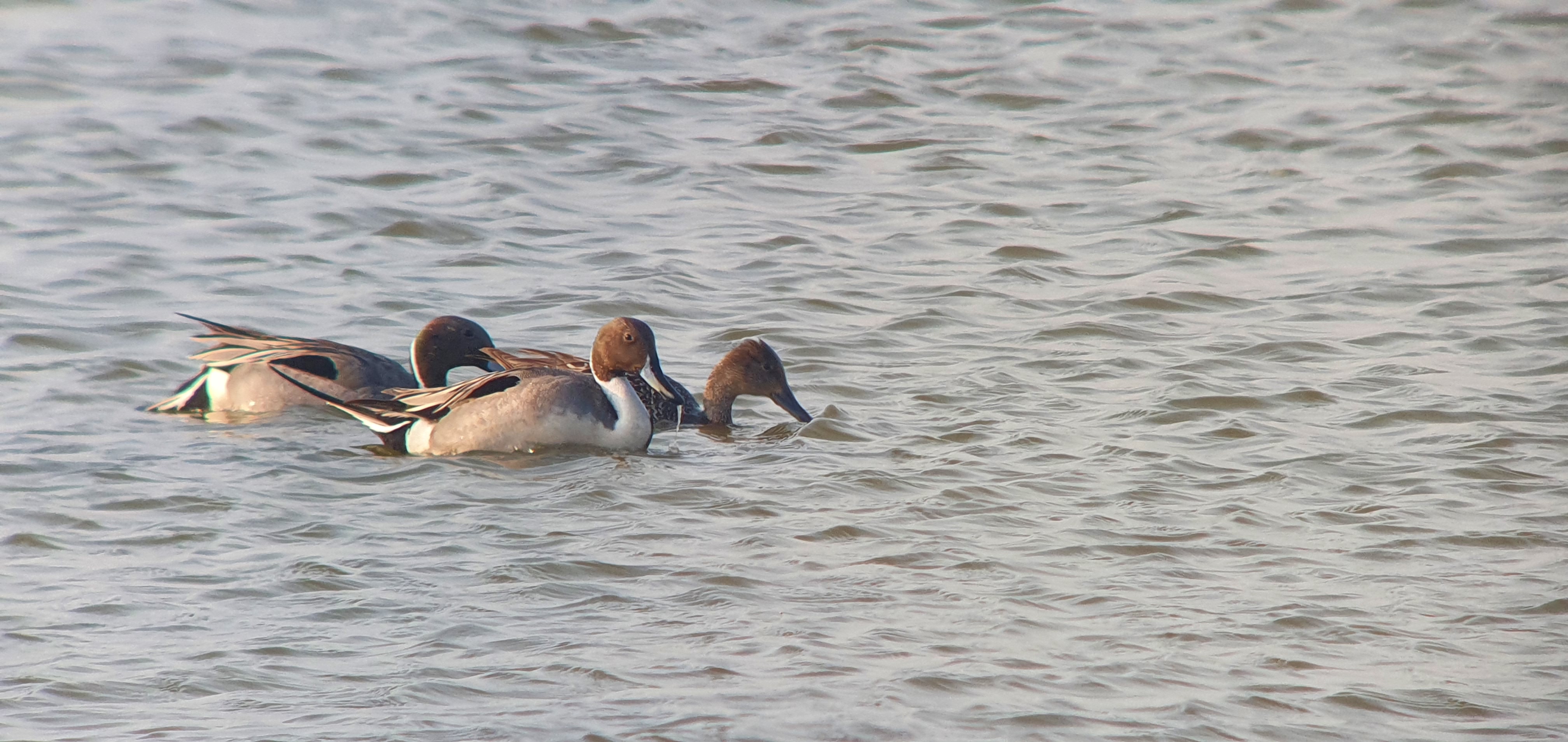
Pintail 22nd March 2022. Photo: Ben Ward


Blackbird, Peacock and Comma 22nd March. Photos: Tom Baker

21st March. A hard frost and foggy start to the morning then bright sunshine prompted raptor passage with; 3 Sparrowhawk, 2 Marsh Harrier, 14 Red Kite, 33 Buzzard and 2 Kestrel. There again were 3 Firecrest; Sykes Farm Track, East Dunes and roadside north of Aylmer. 2 Crossbill moved south and a Hawfinch was calling in the Plantation amidst finch passage. Those fortunate to be on the reserve at dusk were treated to a show of unprecedented proportions; estimates by assembled local birders were in the region of Million Starling which accumulated from many directions and eventually settled to roost on the Mere.  
Starling roost 21st March. Photo: Ian Lyall

Corn Buntings 21st March. Photo: Nige Lound

Stonechat 21st March. Photo: Nige Lound

Song Thrush 21st March. Photo: Kev Wilson


Mid March 2022

20th March. A cold easterly breeze during the morning limited visible migration potential to a few Siskin and Rook, but a Jay moved south down the west Dunes. A Firecrest was along the road edge north of Aylmer - presumably the bird from 17th/18th. A Water Pipit was around the Freshwater marsh. 4 Bearded Tit were seen well on Tennyson's Sands in the calm conditions of the afternoon after which another massive Starling roost was witnessed involving c210,000 birds.

19th March. Two Firecrest today, with one remaining in the east Dunes and one south of  Aylmer. 3 Bearded Tit flew south-east over the west Dunes. The Spring Starling invasion  continued with massively increasing numbers culminating in an evening roost of maybe even 250,000 birds !

Long-tailed Tit 19th March. Photo: Tom Baker

March Moth and Twin-spotted Quaker 19th March. Photos: Nige Lound

18th March. Four Firecrest this morning including yesterdays two on the East Dunes and one along the road edge and a new bird near Shoveler's Pool and another influx of Woodcock (14) apparent on the east side of the Reserve. 12 Whooper Swan flew north ad a Green Woodpecker was a first for the year. Also 2 Merlin, a Short-eared Owl and a Hen Harrier were around. The evening wader roost involved 29,000 Knot, 5000 Dunlin, 500 sanderling and 5,800 Grey Plover. A Spotted Redshank was another first of the year as was an unseasonal Little Stint. The day ended with a roost of 70,000 Starling.


Shelduck, Red Admiral, Chiffchaff 18th March. Photos: Tom Baker

17th March. Three Firecrest this morning: one along the road edge scrub north of Aylmer Ave and now two in the East Dunes. The strong arrival of Chiffchaff continues with 32 just on the west side of the Reserve. A Black Redstart on the Old Coastguard Station was the first of the spring and a Woodlark was over the north end. Another spate of raptor passage involved 11 Red Kite, 23 Buzzard, 3 Kestrel and 3 Sparrowhawk moving south. Around were 3 Buzzard, a Peregrine and a Merlin. 2 Pipistrelle type bats were seen in the evening.

Firecrest 17th March. Photo: Ben Ward

Firecrest 17th March. Photo Ben Ward

Buzzard 17th March. Photo: Tom Baker

Red Kite 17th March. Photo: Tom Baker

Black redstart 17th March. Photo: Ben ward

Black redstart 17th March. Photo: Stuart Ainsworth

16th March. A good movement of Redwings from first thing, with over 600 moving south in some sizeable flocks down the West Dunes. Siskin were also prominent in the morning passage, with over 300 south. Sand Martin and Wheatear were both firsts of the year. Two Firecrests were found; one in the East Dunes and the other in Tennyson's Sands hedge.  A Stonechat and ringtail Hen Harrier were also new arrivals.


Pale-bellied Brent Goose 16th March. Photo: Ben Ward

15th March. Much more routine today after a frosty and foggy start. Starlings were heading out over the sea in groups and 4 Brambling and 3 Crossbill were highlights of a light Finch movement. A Little Ringed Plover was on the lagoons and a Pale-bellied Brent Goose was with the Brent flock. Also on the marsh, a Great White Egret. Birds of prey were represented by hen Harrier, Marsh Harrier, 2 Merlin and 2 Peregrine. Birds around included water Pipit, Blackcap, 5 Brambling and 35 Fieldfare and at6 the tend of the day, 24,000 Starlings went to roost on the Mere.


Male Hen Harrier 15th March. Photos: Tom Baker

Avocet 15th March. Photo: Tom Baker

Great Spotted Woodpecker 15th March. Photo: Ben Ward

14th March. Another interesting morning for vis mig in sunny and calm conditions, with a light SW breeze. Highlights were 11 Crossbill, 2 White Wagtail and 197 Redwing south. But the main features of the day were; an influx of 71 Woodcock, an arrival of Chiffchaff (25) and a southerly movement of Raptors, commencing as the wind increased during the late morning and into the early afternoon.  17 Red Kite and 44 Common Buzzard passed through during this period. Migrant Robins and Blackbirds were evident in the dunes with Blackbirds departing to the east at dusk, when a Little Ringed Plover also passed overhead.

Red Kites 14th March. Photos: Nige Lound

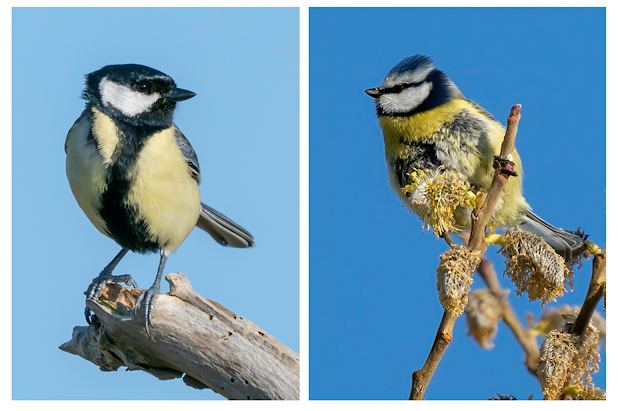
Great Tit and Blue Tit 14th March. Photos: Tom Baker

Brent Geese 14th March. Photo: Tom Baker
Ringed Plover 14th March. Photo: Tom Baker
Skylark 14th March. Photo: Tom Baker

13th March. A big morning for southerly Chaffinch movement with 827 south in two hours. Also 107 Siskin, 1100 Starling, 162 Jackdaw, 26 Rook, 113 Redwing, 6 'alba' Wagtail and various other Finches and Pipits. The highlights were 5 Crossbill and  a White wagtail south. Another 2 Crossbill were in the North Car Park pines and a Firecrest in the East Dunes was the first of the spring. No sea-watching today due to the intensity of vis mig.

Curlew with Teal and Gadwall 13th March. Photo: Tom Baker

12th March. Windy again with a SSE breeze but mostly dry. Finches, Starlings and Corvids moving south in much lower numbers than recent days except for Siskin with at least 60 south. Single Grey Wagtail and Red Kite also headed south. 8 Crossbill were again in the North Car Park pines. Water Rail and Kingfisher were on the Mere and 3 singing Cetti's Warbler around.

Crossbills 12th March. Photos: Nige Lound.

11th March. A bright, sunny day with a SSE breeze. Vis mig involved slightly lower numbers of Chaffinch and Siskin and there were new thrushes in. A flock of 65 Redwing and a Fieldfare left the Plantation to the south and another 2 Fieldfare were on Jackson's marsh. A party of 17 Whooper Swan flew north up the coast and a Red Kite went south.


Migrating Rook, 11th March 2022. Photo - Stuart Ainsworth

Fieldfare 11th March. Photo: Kev Wilson


Redwing 11th March. Photo: Kev Wilson

Zebra Spider Salticus sp 11th March. Photo: Kev Wilson


Brent Geese 11th March. Photos: Tom Baker

Black-headed Gulls 11th March. Photo Tom Baker 


Early March 2022

10th March. A busy morning for visible migration with 420 Chaffinch south along with 200 Jackdaw, complemented by Rook, Greenfinch, Siskin, Linnet, Starling, Lesser Black-backed Gull, alba wagtail, Meadow Pipit, Rock Pipit, Lapwing, Woodpigeon, Stock Dove and Reed Bunting. Highlights of the movement were 3 Woodlark, 3 Brambling, 2 Crossbill, Bullfinch and Sparrowhawk. A Stonechat was a new arrival on the Freshwater Marsh. A further 8 Crossbill were seen in the North Car Park pines again. 9 Water Pipits were perched in Hawthorns before going to roost.

Shelduck 10th March. Photo: Tom Baker

9th March. A very bright sunny day, but with a continued cool wind keeping the temperature down. A Chiffchaff was at Sykes farm - the first singing bird of the year. Visible migration involved increased numbers of Jackdaw, Rook, Chaffinch, Siskin, Meadow Pipit and Rock Pipit with the highlights being 2 Brambling and 2 Red Kite. A small influx of Snipe saw 15 on the saltmarsh, flushed by a male Marsh Harrier and there was a single Jack Snipe. 8 Crossbill were in the North Car Park pines

Eider 9th March. Photo: Nige Lound.

8th March. Another cold morning but bright. Two Great White Egret were around the lagoons but went south independently. Two Cetti's Warbler were in song, a Water Rail was showing well from Hope Hide, with another on the Mere and 15 Corn Bunting and  4 Water Pipit were around the Old Saltmarsh late afternoon.

Blackbird, Great Tit, Greenfinch and Redwing 8th March 2022. Photos: Adrian Royle.

Great White Egret 8th March. Photo: Kev Wilson

Water Rail 8th March. Photo: Kev Wilson

7th March. A cold morning with a biting NNE wind, but bright and sunny. Starlings were moving south again, with 1300 prior to 0830 and a few Rook, Jackdaw and Chaffinch. The regular male Hen Harrier performed well over the Old saltmarsh.

6th March. A productive morning seawatch in clear conditions with a moderate NNE breeze. Highlights were single Great Northern Diver and Black-throated Diver, 123 red-throated Diver and 112 Common Scoter. A party of 7 Whooper Swan flew north and 3500 Starling flew east in two massive groups and were lost to view out at sea. 2 Stonechat remained around the Visitor Centre.

Robin 6th March. Photo: Tom Baker

Redwing 6th March. Photo: Tom Baker

5th March. A full day of drizzle or rain and light to moderate Northerly wind. Visibility was mostly poor again at sea but there were increased numbers of waders at the north roost.

Common Scoter 5th March. Photo: Nige Lound

Mixed Waders 5th March. Photo : Nige Lound

4th March. Light rain and very poor visibility early on, with heaver rain later. Coverage was limited to counting the waders at the north roost in the grim conditions. Here, there were 2350 Dunlin, 650 Sanderling and 800 Grey Plover. It was not possible to check the south roost where there are usually more waders on a 6.7m tide.


Grey Plover and Sanderling in the murk. 4th March. Photo: Kev Wilson

3rd March. A good number of birds in song this morning; Skylark, Chaffinch, Great Tit and Wren, with an encouraging number of Dunnock and Reed Bunting. Coal Tit and Goldcrest look set to hold territory again this spring - usually only one pair of each here. 482 Brent Goose remained on the Reserve (with only 11 juveniles in the flock, reflecting last seasons low breeding success) while the spring movement of Pink-footed Goose was underway, with 85 moving NW. A few finches were moving south with 320 Starling. Also of note, 2 Stonechat, 2 Woodcock, Water Pipit and Bulfinch. Great to see Tom Baker return to the area with his new lens!


Avocet, Oystercatcher, Wigeon and Little Egret with Shelduck 3rd March. Photos: Tom Baker.

2nd March. A dull day all round with intermittent drizzle and light rain. 5 Water Pipit flew onto the Freshwater Marsh in the morning. The evening tide was an ideal height and time for a wader roost count but unfortunately, weather conditions were far from ideal ! Highlights were 2000 Knot, 1300 Bar-tailed Godwit, 2500 Oystercatcher, 796 Sanderling, 2430 Grey Plover and 4830 Dunlin.

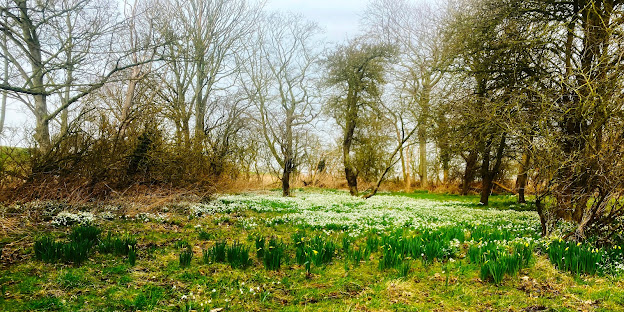
Sykes Farm Orchard with Snowdrops and Daffodils 2nd March. Photo: Nige Lound

1st March. A cloudy start, becoming brighter with a NNE wind. Small numbers of Finches, Starlings and Corvids were moving south, west and north. A typical selection of birds at sea. 2 Water Pipits were around the Freshwater Marsh in the morning with 15 Pipit sp going to roost on the Old Saltmarsh later